Rudrajit Choudhuri

Ph.D. Candidate at Oregon State University

I study the cognitive and socio-technical factors that shape human–AI collaboration, and design human-centered interfaces for AI tools that improve AI-native knowledge work.

My goal is AI support that is trustworthy, responsible, and inclusive, so people can rely on it appropriately while keeping their agency and craft.
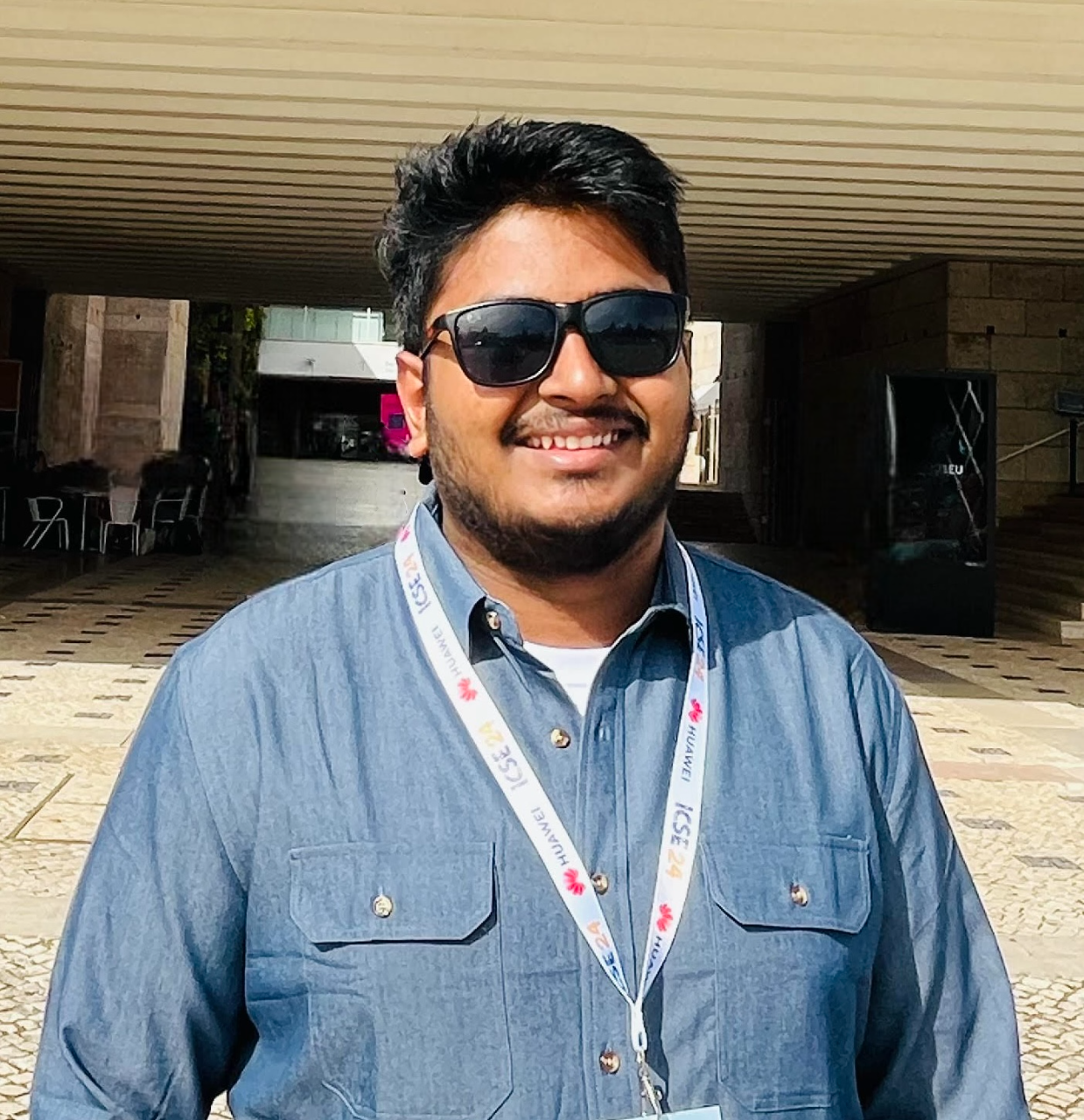
Portrait of Rudrajit Choudhuri
About Rudrajit

Rudrajit Choudhuri is a human-centered AI researcher and Ph.D. candidate at Oregon State University. He studies how people trust, adopt, and work with AI, and turns the findings into interfaces and design guidelines that industry can put into practice.

Two Microsoft internshipsMicrosoft Research · Tech Futures 4 Distinguished Paper AwardsICSE ’26 · ICSME ’26 · CVIP ’21 · ICACA ’21 On TV & in the newsKGW · KATU · KOIN 6 · JPR Global Impact FellowMOSIP · Gates Foundation-funded
30+
Publications
ICSE · TOSEM · IST · ICSME · ICER · EMSE · ACMQ · Applied Soft Computing · NCAA
400+
Citations
h-index 10 · i10-index 10
3,300+
People studied
Developers & knowledge workers in large-scale studies
4
Distinguished paper awards
ACM SIGSOFT · IEEE · IAPR · ICACA

Google Scholar metrics

Research areas

Experience

Latest news & talks

See more

Selected papers

Browse all papers
Scroll for more

Get in touch

I’m always happy to connect, about research or otherwise. For collaborations, talks, or research roles, email me at choudhru@oregonstate.edu.

Bio

About Rudrajit

Rudrajit Choudhuri is a Ph.D. candidate in Computer Science at Oregon State University, working at the intersection of human–AI interaction, empirical software engineering, UX design, and cognitive science. He examines the cognitive and socio-technical factors that shape how developers and knowledge workers trust, adopt, and delegate to AI, where they draw the line on autonomy, and how routine reliance affects their thinking, identity, and craft. Drawing on large-scale studies and controlled experiments, he translates empirical findings into guidelines for human-centered AI tools.

At Microsoft Research, he identified where AI delivers value in software engineering and which interface interventions curb over-reliance; this work earned two Distinguished Paper Awards (ICSE 2026, ICSME 2026) and shaped guidance adopted by partner teams. At Microsoft Tech Futures, he explored what makes a great co-worker in AI-native workplaces and created a cookbook of UI/UX patterns for AI. As a Gates Foundation-funded MOSIP Global Impact Research Fellow, he built a multi-agent LLM workflow that automatically detects inclusivity bugs in software.

He has published more than 30 papers in leading SE/HCI venues (ICSE, TOSEM, IST, ICSME, ICER, EMSE, and ACM Queue) and in AI/ML and computer vision venues (CVIP, ICVGIP, Applied Soft Computing, and Neural Computing and Applications), and his research has been frequently covered on TV and radio and in industry newsletters.

Feel free to use this bio for talks and media.
Full CV